



November 6, 2025
Cryptocurrencies are again at a crossroads — neither in the frenzy of 2021 nor the despair of 2022, but somewhere in between. The tone across digital-asset markets has shifted toward cautious optimism, as investors weigh institutional adoption, new technology cycles, and the next wave of public-market crypto plays against lingering macro and regulatory uncertainty. The next three months will test whether this equilibrium can hold or whether renewed volatility lies ahead.
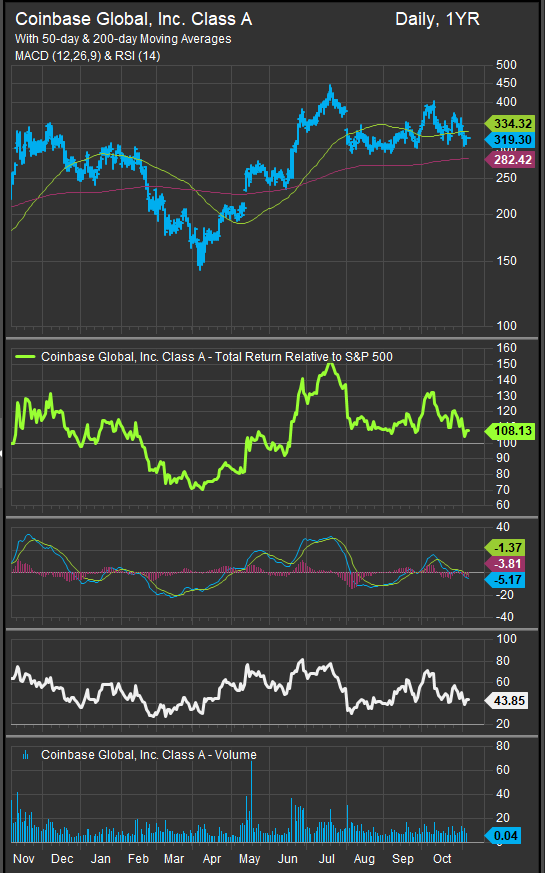
The most promising tailwinds come from institutional participation and broader ecosystem expansion. The continued growth of spot and futures-based ETFs has given digital assets a firmer foothold in mainstream portfolios, driving incremental demand and higher liquidity. Bitcoin and Ethereum remain the institutional favorites, but secondary ecosystems — from real-world-asset tokenization to decentralized finance — are beginning to attract capital again. Stocks like Coinbase (COIN) and XYZ (Block) continue to benefit from this gradual normalization. Coinbase has evolved from a retail exchange into a diversified infrastructure provider serving hedge funds and corporates, while XYZ’s payment and peer-to-peer network strategy keeps it at the heart of blockchain-enabled finance.
COIN
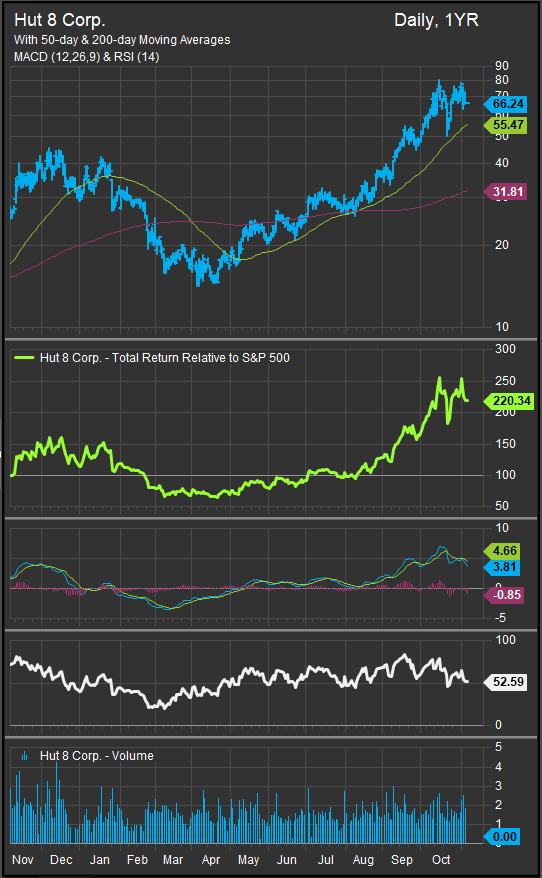
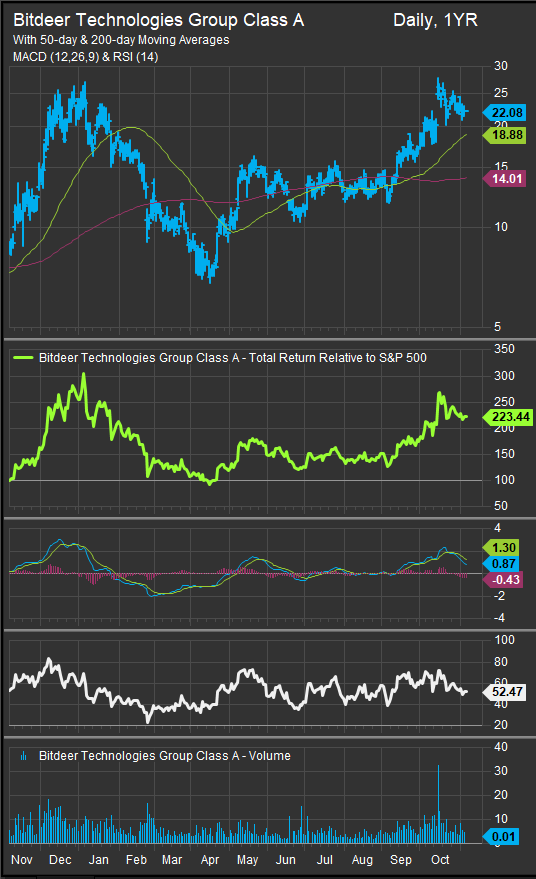
Beyond the large-cap incumbents, a new generation of mining and infrastructure firms is driving much of the equity-market excitement. Companies such as Cipher Mining (CIFR), Riot Platforms (RIOT), Hut 8 Mining (HUT), and Bitdeer Technologies (BTDR) represent a more operationally disciplined cohort than the speculative miners of previous cycles. Their focus has shifted toward energy efficiency, AI-data-center partnerships, and treasury diversification rather than pure hash-rate expansion. For example, CIFR and BTDR have both emphasized low-cost energy sourcing and flexible compute usage, positioning themselves to benefit if the Bitcoin network expands and if digital-infrastructure demand from AI and high-performance computing remains strong. RIOT and Hut 8, meanwhile, have leaned into scale and technology integration, upgrading fleets with next-generation ASICs and building partnerships with utilities to stabilize costs.
HUT
BTDR
From a market-structure perspective, these miners function as high-beta proxies for Bitcoin, but their business models now increasingly reflect the economics of data infrastructure companies. That distinction has become important for investors seeking diversified exposure to the digital-asset ecosystem. While the stocks remain volatile, their cost control, energy arbitrage, and asset-backed financing structures make them more resilient than in prior crypto downturns. The best performers this year have been those that combined production efficiency with opportunistic treasury management — effectively turning cyclical volatility into a balance-sheet asset.
Still, the near-term risks are nontrivial. Regulatory clarity remains incomplete, and policy shifts can move valuations overnight. Liquidity conditions are fragile, particularly if Treasury issuance or global funding markets tighten further into year-end. In addition, crypto-linked equities have run ahead of underlying coin prices, trading at premium multiples that may not hold if Bitcoin consolidates or retreats. The Federal Reserve’s communication in December and early-2026 liquidity trends will likely be decisive for risk sentiment. A delay in expected rate cuts or a renewed rise in yields could prompt a temporary correction across both crypto assets and their equity counterparts.
For now, however, the balance of opportunity still leans positive. Institutional inflows remain steady, ETF assets under management continue to climb, and the AI-crypto crossover narrative provides a structural underpinning for investor interest. The blend of old and new players — from seasoned platforms like XYZ and Coinbase to adaptive miners such as CIFR, RIOT, Hut 8, and BTDR — gives investors a more diversified toolkit than ever before. Unlike prior cycles, when momentum was concentrated in a few speculative names, today’s crypto-equity landscape is broader, deeper, and more operationally grounded.
The prudent approach in this environment is selective participation rather than full-throttle speculation. Investors should favor companies with durable balance sheets, energy discipline, and exposure to real transaction growth rather than simply token price appreciation. In that sense, the maturing mix of established FinTech’s and next-generation miners offers an unusual symmetry: the old guard provides stability, while the new entrants deliver torque. If macro conditions remain supportive (low rates, economy near full employment) and institutional demand continues, the coming quarter could mark the point where crypto equities shift from a volatile trade to a more strategic allocation within growth-oriented portfolios.
Sources
- Bloomberg – Crypto equities rebound on institutional ETF inflows (Nov 2025)
- Reuters – Cipher, Riot and Hut 8 lead new generation of Bitcoin miners (Oct 2025)
- Financial Times – Crypto ETFs attract steady demand as volatility subsides (Oct 2025)
- CoinDesk – Mining firms diversify into AI compute and data-center infrastructure (Nov 2025)
- Fidelity Digital Assets – Q4 2025 Crypto Market Outlook
- Barron’s – Valuations of crypto-related stocks outpace underlying coins (Oct 2025)
Charts and additional data sourced from Factset Research Systems Inc.
