



COMMENTARY:
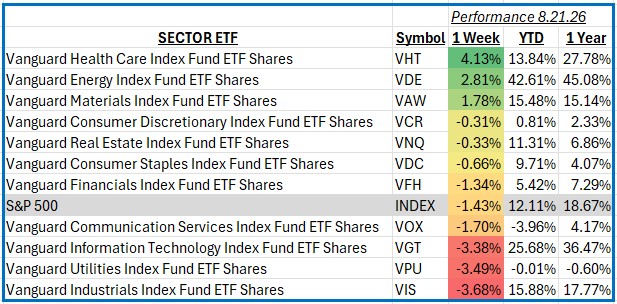
The S&P 500 declined 1.43% for the week ending August 21, snapping a three-week winning streak. The primary drivers were rising Treasury yields, concerns about inflation and government debt, and continued geopolitical uncertainty surrounding Iran. The 10-year Treasury yield approached 4.70%, while the 30-year yield moved above 5.2%, weighing particularly heavily on technology and other long-duration growth stocks.
Health care was the strongest sector, gaining 4.13%, outperforming the S&P 500 by 5.56 percentage points. The standout catalyst was Moderna, which surged more than 140% after positive Phase 3 results for its personalized melanoma vaccine developed with Merck. Merck also gained more than 12%, while strength in Eli Lilly and other large pharmaceutical companies added to the sector’s advance. Health care outperformed materials by the largest margin among the three leaders, beating it by 2.35 percentage points.
Energy gained 2.81%. Higher oil prices provided the primary tailwind as geopolitical tensions increased concerns about potential supply disruptions. Major holdings including Exxon Mobil and Chevron benefited from the strength in crude prices, with oil rising for a sixth consecutive session by Friday. The energy sector’s performance reinforced the market’s rotation toward companies with direct exposure to commodities and inflation protection.
Materials advanced 1.78%. Strength in gold and copper prices supported major holdings such as Newmont and Freeport-McMoRan. Freeport benefited from a sharp rally in copper, while Newmont gained as gold prices reached higher levels amid geopolitical and inflation concerns. The combination of commodity strength and demand expectations tied to electrification and AI infrastructure helped materials remain one of the few areas of the market able to generate positive weekly returns.
At the other end, Utilities fell 3.49%, underperforming the S&P 500 by 2.06%, while Industrials declined 3.68%. Rising Treasury yields pressured interest-rate-sensitive utilities, including NextEra Energy, Southern Company and Duke Energy. Industrials faced broader selling, with GE Vernova, General Electric, RTX and Caterpillar among the notable detractors. Industrials finished just 0.19 percentage points below utilities, highlighting how concentrated the week’s weakness was outside the defensive commodity and health care groups.
Overall, the week reflected a clear rotation away from high-growth, rate-sensitive areas and toward health care, energy and materials. Markets enter the coming week focused on Federal Reserve policy signals, Jackson Hole and Nvidia’s earnings, with bond yields and geopolitical developments likely to remain important drivers of volatility.
