


Lower oil could reopen the door to broader market leadership. Persistent financing pressure would favor companies with strong cash flow—across both growth and value.
This week’s headlines present investors with competing forces: diplomatic efforts that could ease the energy shock, elevated Treasury yields that raise the cost of capital, and an artificial intelligence investment cycle that continues to expand while attracting greater financing scrutiny. Together, they suggest a more selective market in which earnings durability, balance sheets, and the timing of cash flows become increasingly important.
For factor investors, the central question is whether these developments produce a lasting broadening of leadership or another brief rally in the market’s most economically sensitive stocks. A sustained decline in oil alongside resilient demand could support value, high beta, and a wider range of sectors. Persistently expensive financing would instead favor profitable growth and financially strong businesses. The potential pivot is from enthusiasm about future demand toward evidence that companies can convert that demand into shareholder returns.
Growth versus value: Watch the source of higher yields
Higher bond yields can pressure growth valuations because they reduce the present value of profits expected far into the future. But the reason yields are rising matters. Stronger productivity and investment can support earnings even as discount rates increase. An energy shock that raises inflation while weakening household purchasing power creates a less favorable combination: higher financing costs and deteriorating demand.
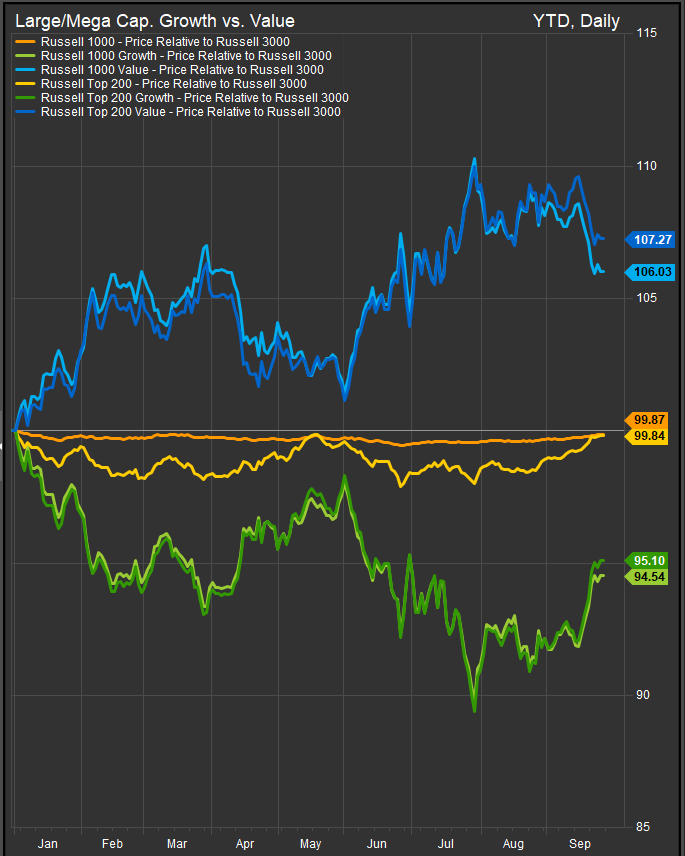
That distinction helps explain why a blanket rotation out of growth could be premature. Established technology and communications businesses with substantial internally generated cash flow have a different risk profile from companies that must repeatedly borrow or issue equity to finance expansion. Both can carry a growth label, but their exposure to tighter financial conditions differs considerably.
The headline pack’s juxtaposition of expanding AI infrastructure demand and financing concerns around Oracle captures that divide. Additional computing demand can broaden the opportunity across infrastructure, networking, and equipment suppliers. Yet a large contract does not automatically establish an attractive investment return. Construction costs, power availability, customer concentration, and the interval between spending and collecting revenue all matter. Growth investors increasingly need to distinguish revenue visibility from free-cash-flow visibility.
Value faces its own test. Energy producers may benefit from elevated commodity prices, while transportation companies, manufacturers, and consumer businesses absorb higher costs. Financials can benefit from some interest-rate environments, but higher funding costs and credit losses can offset that advantage. A low valuation offers limited protection when earnings estimates are falling.
A credible improvement in energy supply could therefore trigger rotation within value: away from beneficiaries of scarcity and toward companies whose margins and customers have been squeezed by expensive fuel. For sector investors, Energy (VDE), Financials (VFH), Industrials (VIS), and Consumer Discretionary (VCR) should be evaluated through their distinct earnings exposures, rather than treated as one cyclical allocation.
High beta versus low volatility: A relief rally needs confirmation
The reported Iran ceasefire proposal creates an obvious catalyst for high beta—stocks that tend to amplify broader market moves. Sustained energy relief could improve consumer purchasing power, reduce business costs, and ease pressure on interest rates. Housing, transportation, smaller companies, and discretionary spending would become important places to look for improving participation.
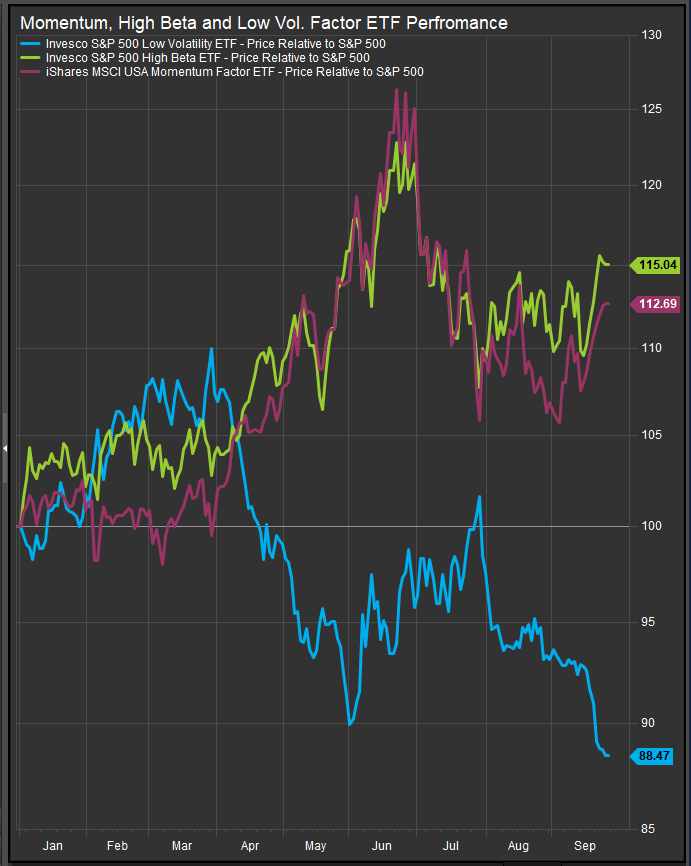
However, diplomatic headlines alone do not establish that outcome. The stronger signal would be a sustained recovery in shipping activity and energy availability, followed by lower cost pressures and stable earnings expectations. A sharp rebound in previously weak stocks can reflect short covering before operating conditions improve.
Credit conditions provide a second test. High-beta companies with substantial refinancing needs may struggle even if oil falls. Conversely, stable credit spreads alongside easing Treasury yields would create a more supportive financing backdrop. Investors should distinguish lower yields accompanied by resilient growth from lower yields caused by a worsening economic outlook. The former can support broader risk-taking; the latter may favor defensive earnings.
Low volatility also requires a closer look. Strategies with meaningful exposure to Utilities, Consumer Staples, or Real Estate can remain sensitive to interest rates, valuation, and leverage. Historically stable share prices do not eliminate financing risk. Utilities (VPU) may have durable demand but large capital requirements; Real Estate (VNQ) remains exposed to borrowing costs and property-level fundamentals. Portfolio resilience depends on the underlying businesses as well as the factor label.
Momentum: Look for leadership that survives changing headlines
Momentum can continue working through this environment, but investors need to understand what is driving it. Leadership supported by earnings upgrades has a different foundation from leadership dependent on an escalating geopolitical risk premium.
Energy illustrates the potential reversal risk. If supply disruption persists, earnings support could sustain leadership. If a credible reopening sharply reduces that premium, previous winners could reverse while fuel-sensitive laggards rebound. That transition can challenge momentum strategies because their holdings generally adjust according to scheduled rules rather than immediately after new information arrives.
Within AI, the reported broadening of computing demand raises a different possibility: momentum could spread beyond a narrow group of dominant beneficiaries. The useful confirmation would be broader earnings upgrades, improving margins, and sustained relative strength among additional suppliers. One contract announcement or a burst of thematic buying would be insufficient.
Sector investors should therefore watch whether equal-weight participation improves alongside the largest stocks, and whether leadership persists through quarter-end portfolio adjustments. Broader participation backed by better earnings would be a more durable signal than broader participation driven solely by falling yields.
Quality: A bridge between growth and value
Quality offers a useful framework across both styles. In this environment, the most relevant characteristics are manageable leverage, reliable cash generation, credible returns on investment, and the ability to absorb higher costs without sacrificing demand.
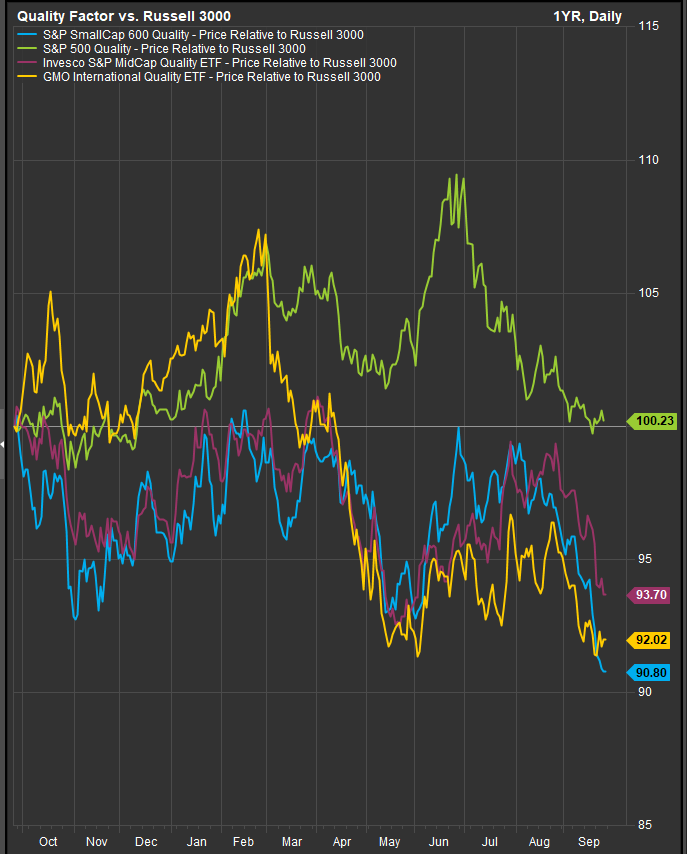
The financing concerns described in the headline pack make those distinctions particularly relevant to AI. Suppliers that collect cash as equipment is delivered may have different risks from developers committing capital years before a facility operates. Even contracted revenue must be assessed against execution risk and the financial strength of the customer.
Quality also extends beyond technology. Industrial businesses with disciplined project selection, financial companies with strong funding franchises, and consumer companies offering compelling value can all qualify. However, a strong business can still be an expensive stock. Investors should examine both financial strength and the valuation paid for it, while checking whether multiple quality and growth ETFs simply duplicate the same large holdings.
The pivot points that matter
The most constructive broadening scenario would combine sustained energy relief, stable credit conditions, and economic data consistent with continued expansion. That combination could support selected cyclical value stocks, high beta, and a wider range of industrial and consumer businesses. The September employment report, scheduled for October 2, is an important upcoming test of that growth backdrop.
A more difficult scenario would pair persistent energy disruption with expensive financing and weaker earnings revisions. Under those conditions, cheap valuations could prove misleading, high beta could remain vulnerable, and quality would deserve greater emphasis. A third possibility—continued growth with stubbornly high yields—would favor selectivity within growth, particularly companies capable of financing expansion internally.
For ETF investors, the decision is how much economic sensitivity, financing dependence, and valuation risk each allocation actually contains. The next durable factor rotation will need confirmation from cash flows, credit, and earnings—not simply a change in the morning headlines.
Sources: September 25 headlines sourced from Reuters & FactSet Research Systems Inc.; U.S. Bureau of Labor Statistics release calendar. Headline-pack developments are treated as reported; scenario analysis and factor implications are original commentary. No factor-return dataset was supplied, so this editorial does not assert measured weekly factor outperformance.
Disclaimer: For informational purposes only; not individualized investment advice. ETF references illustrate sector exposures and are not recommendations. Investing involves risk, including loss of principal.
