


The late-July rebound in Growth is becoming more convincing, but the supplied Russell style chart makes an important point: this is still a countertrend move inside a year dominated by Value. Russell 1000 Value and Russell Top 200 Value remain roughly 7% above the Russell 3000 on a YTD relative basis, while their Growth counterparts remain about 7% below it. Meanwhile, the Russell 1000 and Top 200 themselves sit close to the Russell 3000. In other words, style—not market capitalization—has been the dominant performance variable in 2026.
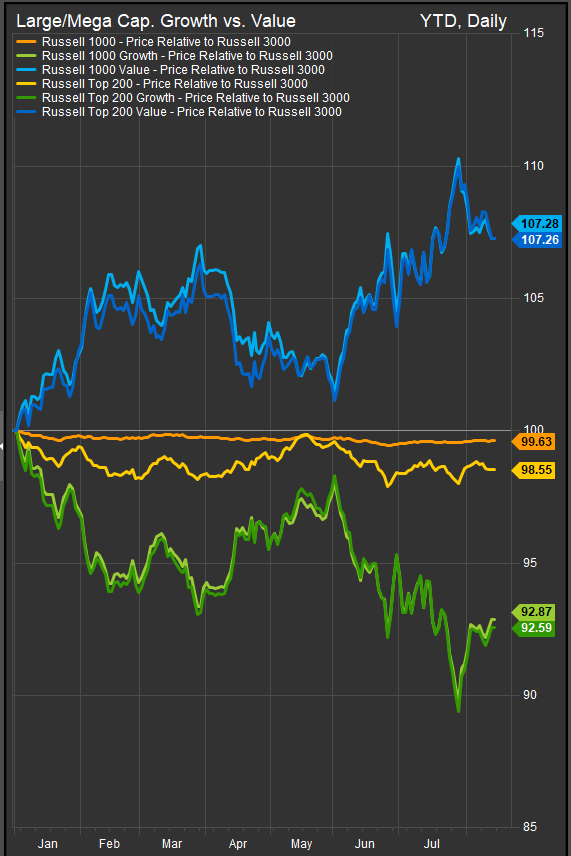
What has changed since late July is direction. Growth relatives have rebounded sharply from their lows while Value has surrendered part of its YTD advantage. Three developments explain the pivot: a technical clearing of crowded momentum exposure, better evidence that AI spending can produce earnings, and an improving inflation/rates backdrop.
The Technical Reset Came First
July’s momentum unwind forced hedge funds to reduce enormous concentrations in semiconductors, AI infrastructure and other high-beta Growth winners. Goldman Sachs described cumulative technology selling by hedge funds as the largest in its decade-long dataset and characterized the episode as a significant reduction in crowded AI exposure rather than an abandonment of the underlying theme. The most visible capitulation came when Situational Awareness was forced to unwind most of its public-equity portfolio and sold the bulk of those holdings to Citadel. That transfer mattered because it removed a large leveraged seller whose liquidation had been amplifying price declines. This helps explain why Growth could rebound even before the macro backdrop decisively improved. The supply of forced sellers diminished. But a technical clearing event only creates the opportunity for a rally. Fundamentals and rates determine whether it becomes sustainable leadership.
Earnings Revalidated Quality Growth
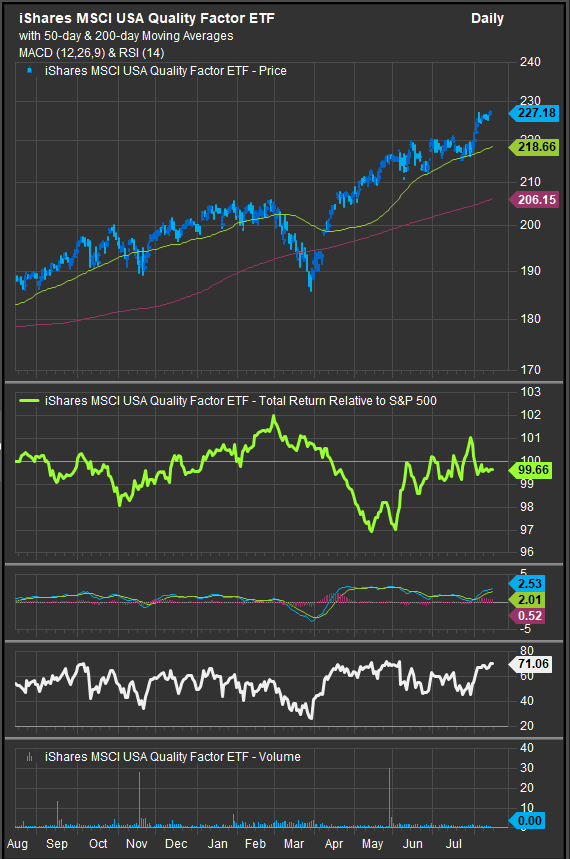
Chart: QUAL (above) and other Quality Factor ETFs have seen a boost in near-term performance as investors have prized clean cash flow generation.
Microsoft and Amazon supplied the fundamental catalyst. Microsoft reported 43% Azure growth, above expectations, while Amazon’s AWS revenue increased 37%, its strongest cloud growth in years. Investors rewarded evidence that AI infrastructure spending was translating into revenue rather than simply consuming free cash flow. That distinction is increasingly important. The market is not returning to the first phase of the AI trade, when almost anything connected to chips, data centers or machine learning could command a premium. Reuters estimates that hyperscaler capital spending is becoming large enough to pressure free cash flow materially, even as AI revenues expand.
The emerging leadership profile is therefore Quality Growth: companies with strong earnings revisions, high margins, recurring revenue and enough internal cash generation to finance AI investment. That favors profitable Technology and Communication Services over speculative or heavily financed Growth.
Inflation Finally Gave Growth Some Help
The second catalyst arrived from the macro data. July CPI increased just 0.1% month over month, while core CPI rose 0.2%. Core inflation slowed to 2.5% year over year. Then Thursday’s Producer Price Index was unchanged versus expectations for a 0.2% increase. Treasury yields fell following both reports as investors reduced expectations for another near-term Fed hike. Combined with July’s weak employment report, those readings have weakened the argument for additional monetary tightening. Global equity funds have now attracted inflows for 12 consecutive weeks, with the latest demand supported by strong earnings and reduced rate-hike expectations. This is exactly the macro combination Growth needed: earnings holding up while inflation risk begins to moderate. But there is still a potential road-block.
Real Yields Haven’t Broken Yet
Growth’s durable pivot will not be confirmed by a Fed pause alone. Long-term real yields have to fall. Reuters noted Friday that the U.S. 30-year real yield remains near 3%—around an 18-year high. Real borrowing costs are being supported not only by monetary policy, but by enormous demand for capital from governments and the AI buildout. Alphabet, Amazon and Meta alone have issued nearly $220 billion of bonds in 2026, more than double their combined issuance for all of 2025. That creates an unusual problem for Growth investors. AI investment is producing stronger earnings, which supports Technology equities. But financing that same investment is helping push real interest rates higher, raising the discount rate applied to those future earnings.
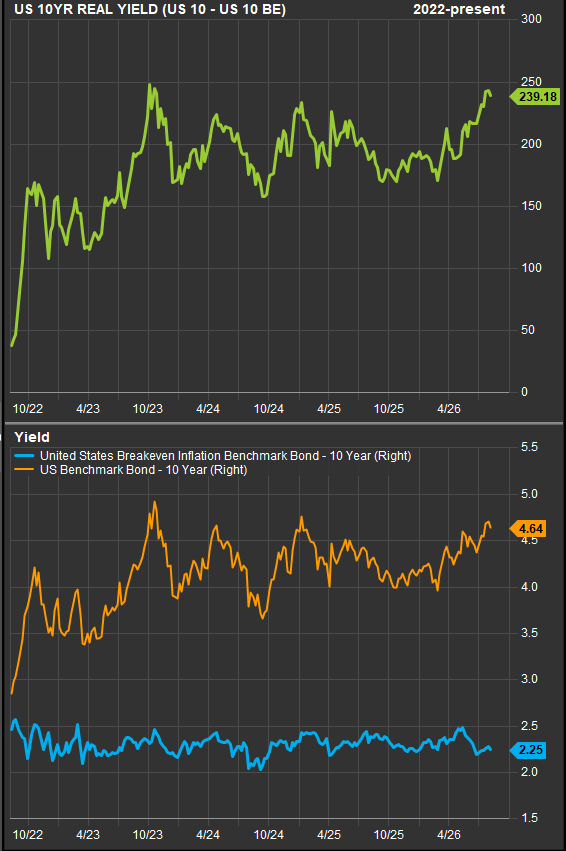
The 10-year nominal Treasury yield has eased toward roughly 4.65% following the inflation reports, but long-term borrowing costs remain historically restrictive. Until real yields establish a sustained downtrend, Value retains an important macro advantage.
What Would Confirm a Sustainable Growth Pivot?
The relative chart provides a useful technical roadmap. Growth has bounced from roughly 90 toward the 92–93 area relative to the Russell 3000. That is encouraging, but it remains below the former 94–95 area where previous rallies failed. A move through that zone would begin to establish a higher-high/higher-low pattern. At the same time, Value has retreated from approximately 110 toward 107. A break below roughly 105–106 would provide stronger evidence that YTD Value leadership is actually being unwound rather than temporarily corrected. The macro confirmation is even more important.
First, real yields need to decline. Falling inflation breakevens alone are not enough. Growth needs nominal Treasury yields to fall at least as quickly as inflation expectations so the real discount rate moves lower.
Second, core inflation must remain tame. July CPI and PPI were encouraging, but additional readings near 0.1%–0.2% monthly core inflation would strengthen the case that the Fed can remain on hold.
Third, the Middle East cannot generate another sustained energy shock. Negotiations surrounding the Strait of Hormuz have recently stalled and shipping remains disrupted, so this source of inflation risk has not disappeared.
Finally, AI earnings must keep validating the spending. Growth leadership will be much healthier if software, cloud, digital advertising and application-layer businesses participate alongside semiconductors rather than the rally becoming concentrated once again in a few leveraged infrastructure trades.
The Factor Trade
For now, Quality remains our preferred bridge between Value and Growth. Quality captures profitable Technology and Communication Services while retaining the strong cash flow and balance-sheet characteristics that remain valuable with real yields elevated. Growth is improving and has the most upside if real yields break lower. The late-July technical purge, better hyperscaler earnings and cooler inflation have created a much better setup. Value is not broken. Financials, Industrials and other economically sensitive Value exposures still benefit from positive nominal growth and elevated rates. The YTD relative trend remains decisively in their favor. Momentum is rebuilding. July’s liquidation removed significant excess positioning, but Momentum and Growth should not be treated as interchangeable. The next Momentum cycle may favor profitable software, platforms and other earnings-backed Growth rather than simply recreating the semiconductor-heavy trade that just unwound.
The Bottom Line
The late-July Growth rally has more substance than a simple short-covering bounce. Forced selling has diminished, major cloud companies are demonstrating AI monetization and July inflation data have reduced the threat of additional Fed tightening. But the Russell chart still says Value owns the YTD trend. The decisive regime change comes if those improving fundamentals are joined by falling long-term real yields. If inflation remains contained, energy risk recedes and the 10- and 30-year real yields finally turn lower, Growth has both the cleaner positioning and earnings support required to take leadership. If real yields remain structurally high because government borrowing and AI capital demand continue competing for scarce capital, the better trade remains Quality Growth rather than Growth at any price—and Value leadership can persist longer than the late-July bounce currently implies.
Disclaimer: This commentary is for informational purposes only and does not constitute investment advice. Market conditions, factor relationships and index composition can change. Investors should consider their objectives, risks, charges and expenses before investing.
