



COMMENTARY:
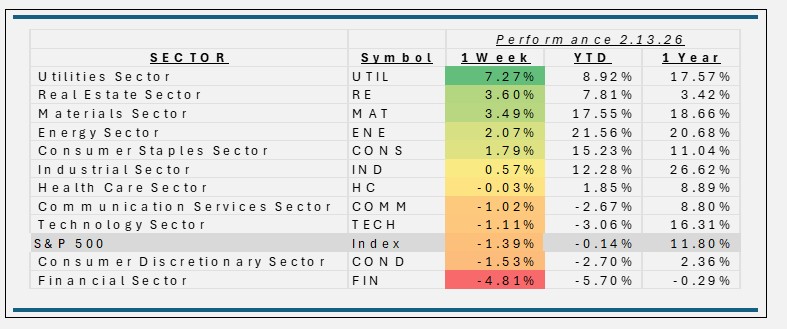
- The S&P 500 declined about 1.4% for the week ending Feb. 13, 2026, as investors shifted away from high-growth technology and AI-linked stocks that had previously driven much of the market’s gains. Risk appetite pulled back, leading many investors to rotate from growth into more defensive or value-oriented sectors. Mixed corporate earnings also contributed to volatility, with notable stock-specific moves throughout the week.
- The Utilities sector was a standout performer for the week, rising approximately 7.3% even as the broader market declined. The rally was driven largely by a rotation into defensive sectors as investors reduced exposure to higher-volatility growth and technology stocks. In addition, supportive earnings results and constructive demand trends for electricity—particularly tied to infrastructure investment and expanding data center needs—boosted sentiment. Utilities, known for steady earnings and dividend income, benefited from this “flight to safety” trade.
- The Real Estate sector rose 3.6% last week as investors shifted toward yield-oriented, defensive parts of the market. With broader markets under pressure, real estate stocks attracted demand for steady income and earnings visibility. Healthy housing demand and resilient rental fundamentals helped sentiment, especially as interest rates remained favorable for property investors. Overall, the real estate rally reflected investor preference for stable cash flows and dividends in a week marked by broader equity volatility.
- Financial sector lagged, declining about 4.8%. Rising market volatility and rotation out of cyclical, interest-rate-sensitive areas weighed on bank and financial stocks as investors sought more defensive sectors like utilities and real estate. Mixed economic data and uncertainty around future Federal Reserve policy also pressured financials. Slower economic indicators raised questions about loan growth and credit demand, while volatility in fixed-income markets reduced trading revenue expectations. The sell-off reflected investor caution amid uncertainty about economic momentum and profit pressure on key financial franchises.
- Only 6 weeks into the year, there is a 27% spread between the highest performing sector (Energy +21.36%) and the lowest performing sector (Financials -5.7%).
- In short, this week, markets were influenced by profit-taking in high-beta sectors, continued economic uncertainty, and ongoing data releases. Investors appear to be balancing optimism around inflation with caution over future earnings and interest-rate expectations.
