

March 26, 2026
The past week’s trading reinforces that sector allocation is being driven less by upside participation and more by downside survivability in a higher oil / higher rate regime. The recurring pattern—oil up, yields up, equities down—has forced investors to concentrate capital into sectors with either direct inflation leverage, insulated earnings streams, or visible structural demand. ETF flow and performance data confirm that positioning is already shifting in that direction, even if not yet fully expressed at the index level.
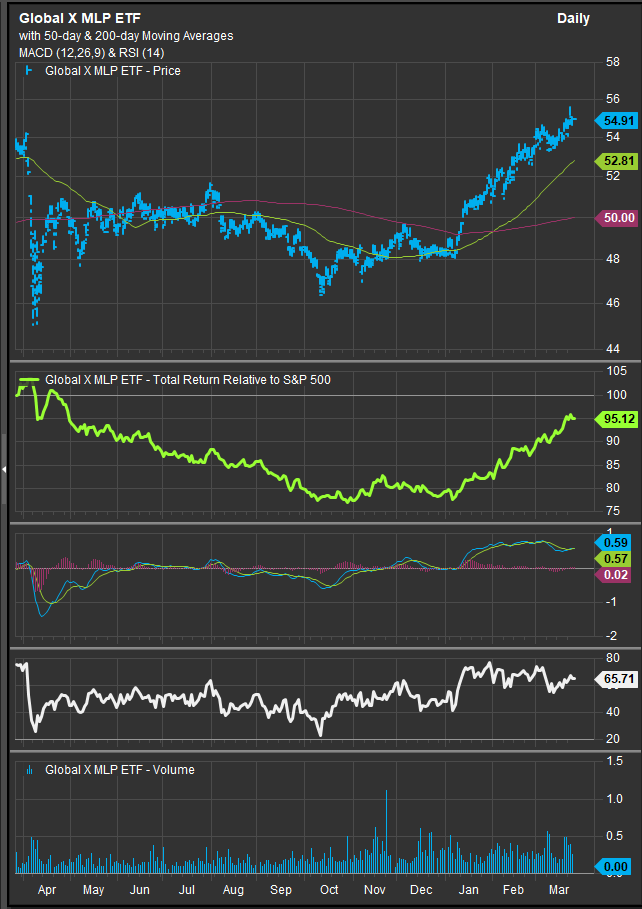
Energy remains the clearest structural overweight in this environment, but the allocation is highly selective. Investors are not broadly chasing commodity beta; they are targeting cash-flow durability within the energy complex. While commodity proxies like SPDR Gold Shares (GLD) and iShares Silver Trust (SLV) have seen persistent outflows (~-$2–5B over 1M across metals exposures) despite sharp price volatility, energy-linked equities and infrastructure have held up better on both performance and flow trends. This aligns with the macro narrative: oil supply disruptions tied to the Strait of Hormuz and ongoing geopolitical escalation are supporting pricing, but investors prefer fee-based or integrated exposure rather than volatile spot-driven trades. In a sustained high-energy scenario, this remains the first destination for incremental capital.
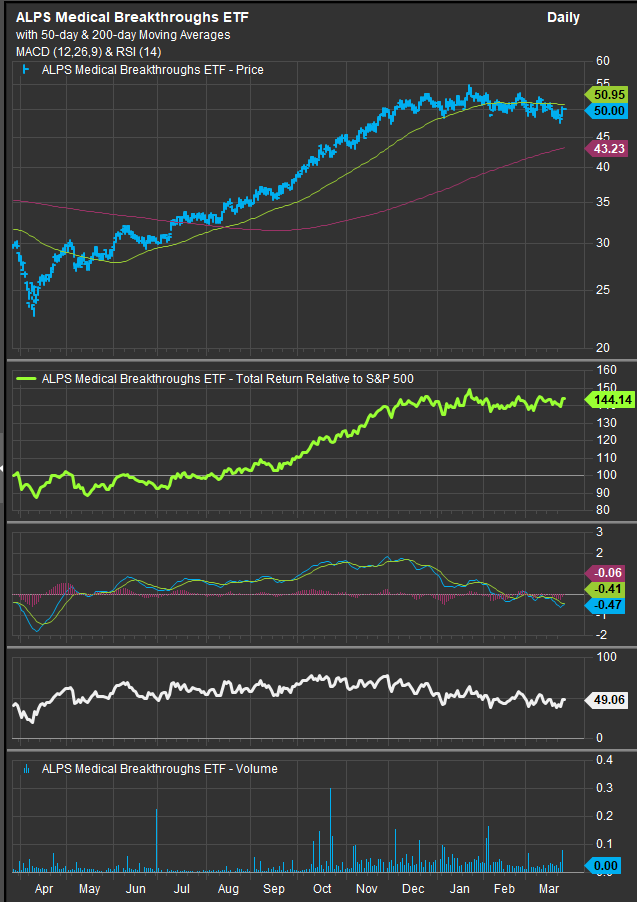
Health care—specifically biotech—is emerging as one of the more important non-macro-dependent overweights. ETF performance has been consistently strong on a short-term basis (e.g., XBI, SBIO and LABU leading daily gainers repeatedly this week), supported by a steady cadence of M&A and clinical catalysts. Unlike traditional defensives, biotech is not being bought for stability but for idiosyncratic alpha generation, with deals like Gilead/Ouro and Merck/Terns reinforcing the bid. The key distinction is that flows into health care are not reacting to rates or oil—they are being pulled by event-driven return potential, making the sector particularly valuable when macro visibility is low.
Technology remains a core allocation, but flows and performance show a sharp internal rotation that is critical for positioning. Broad growth exposures such as Invesco QQQ Trust (QQQ) and SPDR S&P 500 ETF Trust (SPY) continue to see large outflows (-$5B and -$15B over 1M, respectively), indicating that investors are using index beta as a funding source. At the same time, targeted growth and software exposure via iShares Expanded Tech-Software Sector ETF (IGV) has attracted ~$2.5–2.8B in 1-month inflows, even as the ETF underperformed on a 1-week basis. This divergence highlights a key trend: long-term conviction in AI remains intact, but tactically, investors are reallocating within the sector. Semiconductor exposure (e.g., VanEck Semiconductor ETF (SMH)) has shown relative price resilience despite ~-$900M+ in recent outflows, while software has been pressured by AI disruption concerns. The implication is that under macro stress, investors prefer AI infrastructure and compute (chips, CPUs, inference) over application-layer software with less certain pricing power.
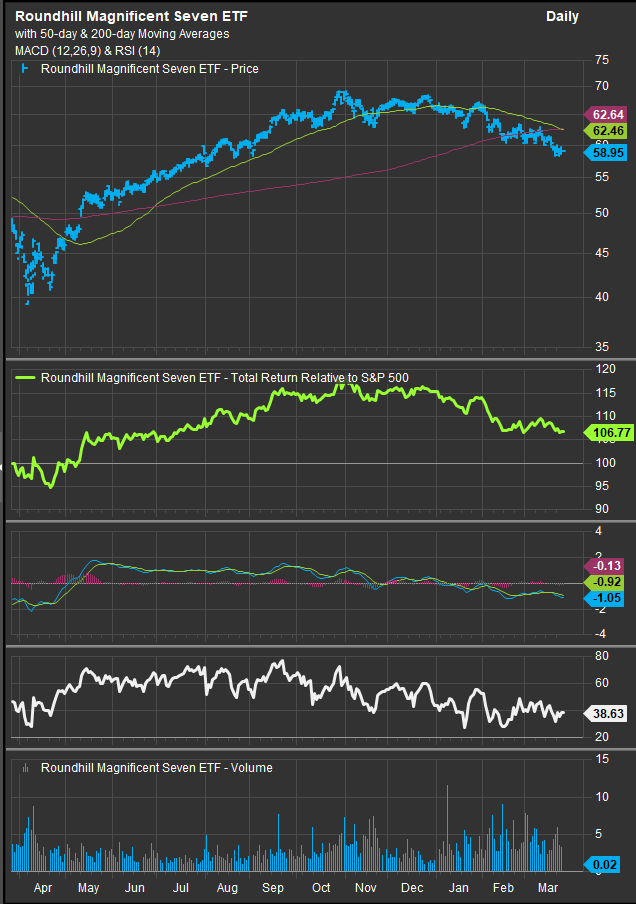
MAG7 (MAGS) remains in a bearish/distributional pattern
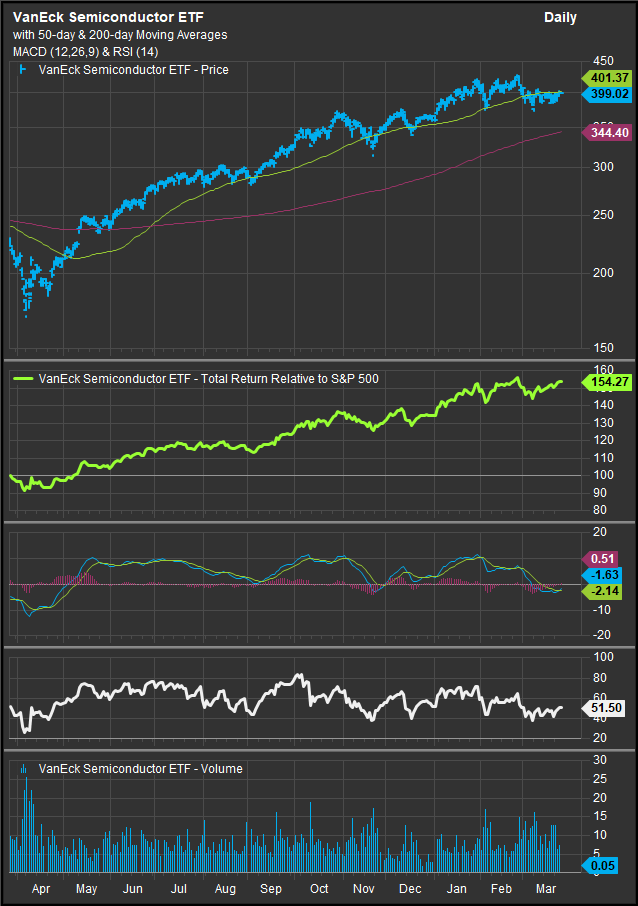
Semiconductors (SMH) remain bid in the near-term as AI infrastructure demand remains unchecked.
Consumer-facing sectors show the clearest signs of stress and are increasingly being avoided. Discretionary exposure—particularly housing and travel—has behaved as a pure function of oil and rate volatility. Even though travel-related ETFs have posted strong 1-week rebounds (~+2%), their 1-month performance remains deeply negative (~-10%), confirming that these are short-covering rallies rather than durable allocations. Housing data and company commentary (e.g., KB Home) further reinforce that affordability pressure is building. There is little evidence of sustained inflows into discretionary ETFs, suggesting investors are not willing to underwrite demand-sensitive earnings in a higher energy cost environment.
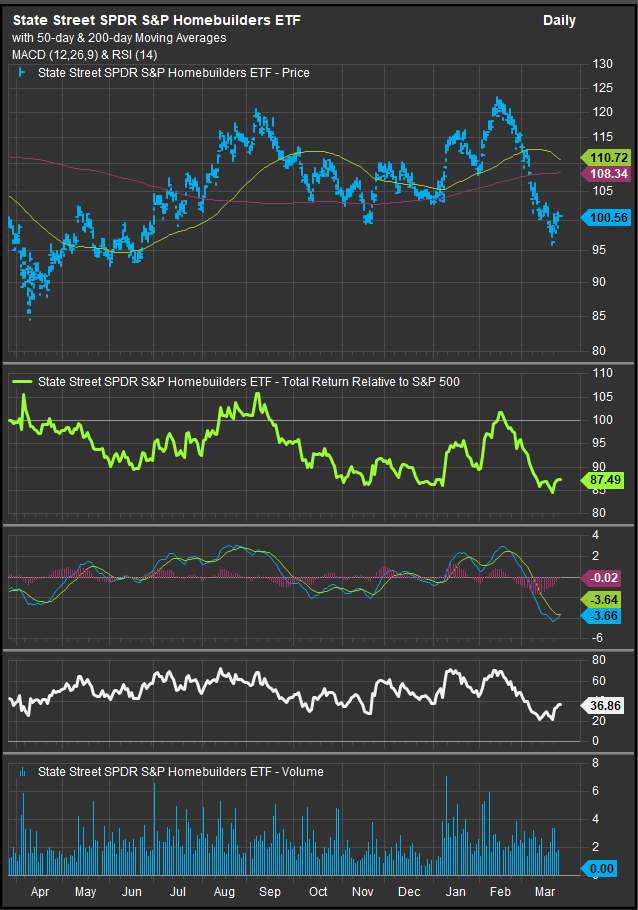
Financials are similarly constrained. While trading desks and capital markets activity have benefited from volatility, broader ETF flows indicate caution. The combination of private credit stress (Apollo withdrawal limits, FSK downgrade) and weak Treasury auctions is raising concerns about liquidity and balance sheet risk. There is no clear inflow trend supporting financials, and in many cases, investors appear to be avoiding credit-sensitive exposures altogether in favor of more transparent public-market income strategies.
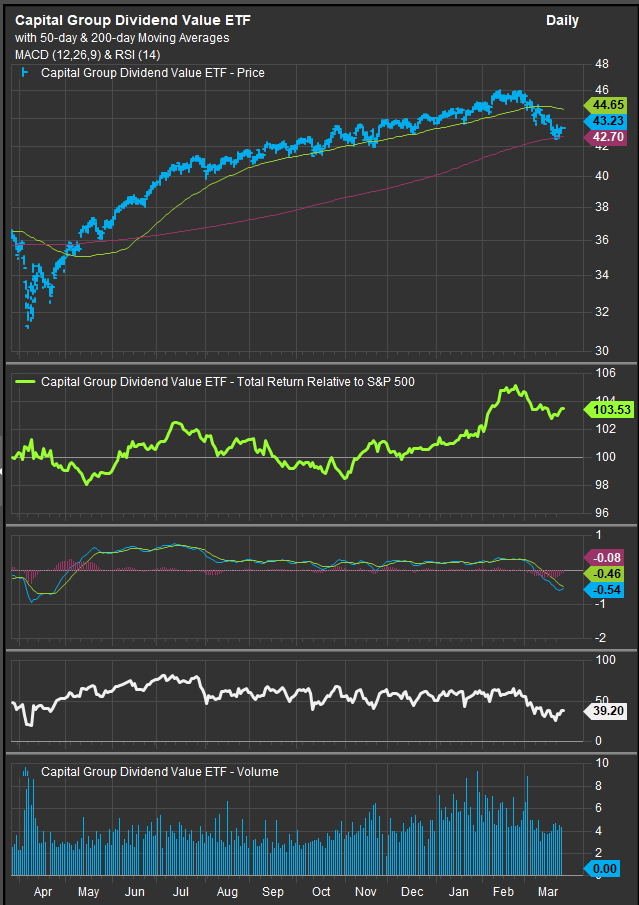
That rotation is most visible in dividend and quality equity ETFs. Vehicles such as Vanguard Total Stock Market ETF (VTI), Vanguard Growth ETF (VUG), and Vanguard Value ETF (VTV) have all seen multi-billion dollar inflows over both 1-month and YTD horizons, while dividend-focused funds like Schwab U.S. Dividend Equity ETF (SCHD) and Capital Group Dividend Value ETF (CGDV) are also attracting steady capital. This is the clearest evidence that investors are shifting toward cash-flow visibility and balance sheet strength rather than chasing cyclical upside. In a higher-rate environment, these exposures function as a hybrid between equity and income, making them more attractive than both bonds (given rate volatility) and high-beta equities.
Cash flow has been sought after.
MLP’s have had multiple tailwinds from Energy and Income characteristics
Finally, the most consistent underweights remain rate-sensitive and duration-heavy sectors. Real estate ETFs continue to lag with no meaningful inflow support, reflecting direct exposure to rising yields and tighter financing conditions. Utilities, while traditionally defensive, have not attracted strong capital either, as higher rates compete with their yield profile. Both sectors are effectively crowded out by the combination of inflation risk and elevated real yields, limiting their usefulness as hedges in the current regime.
The overarching conclusion is that sector allocation is converging around a clear hierarchy. Investors are prioritizing energy (cash-flow exposure), health care (biotech catalysts), and selective AI infrastructure, while rotating into dividend and quality equity ETFs for stability. At the same time, they are funding these positions by reducing exposure to broad index beta (SPY, QQQ), precious metals (GLD, SLV), and rate-sensitive sectors like real estate and discretionary. If oil remains elevated and yields continue to rise, this rotation is likely to intensify, not reverse. Quicker resolution to the Middle East conflict would have an opposite effect and we think that would spur re-entry into the metals trade and more speculative oversold themes like crypto.
Data sourced from FactSet Research Systems Inc. and StreetAccounts
