



COMMENTARY:
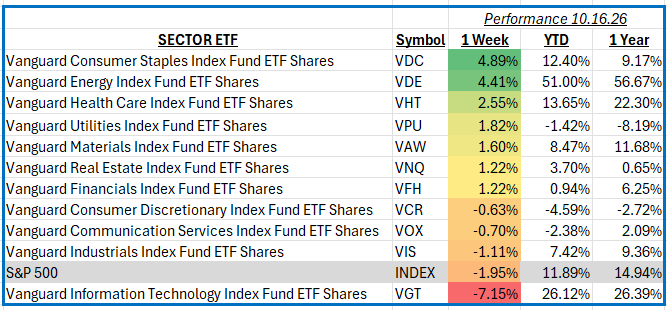
The S&P 500 declined 1.95% for the week ending October 16, as renewed inflation concerns and a sharp technology sell-off weighed on investor sentiment. The Nasdaq Composite fell approximately 4.5%, marking its worst weekly performance since June, while the Dow Jones Industrial Average gained ground as investors favored more defensive areas of the market. Three themes dominated trading: hotter-than-expected inflation, growing concerns about the sustainability of artificial intelligence (AI) investment returns, and continued rotation toward defensive sectors. Investors also looked ahead to upcoming corporate earnings for additional insight into business conditions and technology spending.
Consumer Staples
Consumer staples led the market, gaining 4.89% as investors favored companies providing essential goods during a period of uncertainty. Strength among major household-product and food companies, including Procter & Gamble, Walmart, and Costco Wholesale, supported the sector’s defensive appeal. These businesses benefit from relatively consistent consumer demand, even when economic and market conditions become less predictable. The rotation into established, cash-generating businesses reflected investors’ desire for greater stability amid volatility in growth-oriented investments.
Energy
Energy advanced 4.41%, supported by firm oil prices and geopolitical concerns affecting global energy markets. Exxon Mobil and Chevron were among the major integrated energy companies positioned to benefit from stronger crude prices, while ConocoPhillips offered additional exposure to oil and natural gas production. Renewed concerns about Middle Eastern tensions and potential supply disruptions helped sustain interest in energy producers. The sector’s gains also highlighted the potential diversification benefits of energy stocks when inflation and commodity prices become important market drivers.
Health Care
Health care rose 2.55%, benefiting from its defensive characteristics and demand for essential medical products and services. Pharmaceutical companies such as Eli Lilly, Merck, and AbbVie, alongside managed-care providers including UnitedHealth Group, represented important sources of sector exposure. Investors increasingly favored businesses with established revenue streams and less dependence on aggressive economic growth assumptions. Although individual companies faced their own earnings and regulatory considerations, health care’s positive performance demonstrated the appeal of more defensive industries during a difficult week for equities.
Industrials and Information Technology
Industrials declined 1.11%, outperforming the S&P 500 by 0.84 percentage points. Aerospace and defense companies such as RTX and GE Aerospace, along with industrial conglomerate Honeywell, provided exposure to businesses supported by long-term infrastructure, defense, and equipment demand. Information technology, however, fell 7.15%, underperforming the broader market by 5.20 percentage points and lagging industrials by 6.04 percentage points. Major technology and semiconductor companies, including Nvidia, Broadcom, Micron Technology, and Intel, faced selling pressure as investors questioned the sustainability of AI-related spending and valuations. The sharp decline reinforced concerns that substantial investment in AI infrastructure may not translate into profits quickly enough to justify elevated expectations.
Closing Perspective: This week’s performance highlighted the importance of diversification. As technology shares came under pressure, defensive sectors offered a measure of resilience, underscoring the value of maintaining a balanced, long-term investment strategy.
