
November 30, 2025
November delivered one of the most dramatic sentiment swings of the year. U.S. equities bounced sharply off early-month lows, with the S&P 500 rallying ~3.5% over three sessions heading into Thanksgiving week and rate-cut odds for December climbing from <30% to over 80%. Treasury yields fell 3–4 bp across several sessions, and a deeply oversold market—nearly two-thirds of the S&P below their 50-day moving average—helped fuel the rebound.
Yet beneath this recovery, the underlying picture is more fragile than the headline advance suggests. AI narratives remained highly volatile, leadership narrowed around a handful of companies, and several consumer datapoints flashed genuine warning signs. As the market turns toward December, the question is not whether the rally is real—the technicals clearly improved—but whether it can last without stronger confirmation from earnings and the holiday spending season.
AI Competition Fears Drive Near-term Correction
Google’s Gemini 3 launch and reports it may sell/rent its TPU chips to META shifted much of the AI momentum away from the hardware complex. GOOGL rose ~35% in six weeks, while NVDA—despite a $2B revenue beat and $3B above-consensus guidance—sold off on renewed competition concerns. This dispersion suggests a market rotating from capex-heavy AI names toward firms demonstrating clearer ROI and product leadership.
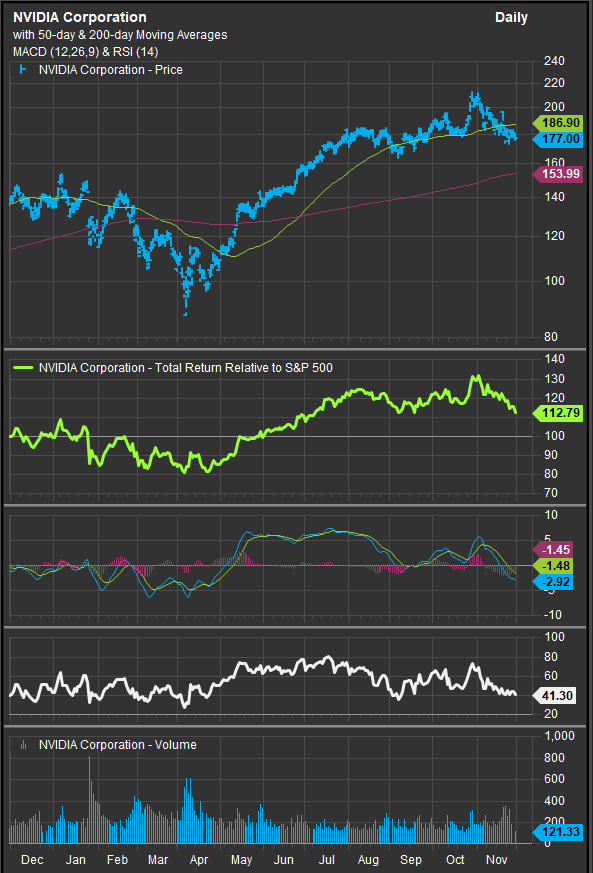
Speculative pockets—high beta, most-shorted, retail favorites—also surged after early-November deleveraging ran its course. Equal-weight indices outperformed cap-weight by 50–100 bp during several sessions, hinting at broadening participation. Travel, airlines, industrial metals, and regional banks joined the rotation, while Energy continued to lag as WTI crude fell in six of the past eight weeks, weighed down by geopolitical uncertainty and soft physical demand.
Still, much of this rotation appears driven by positioning rather than fundamentals. Rate-cut odds swung violently on a handful of dovish remarks, and several lagging industry groups rallied despite limited earnings support. November’s bounce may have been necessary—but it may not be durable unless incoming data stabilizes more convincingly.
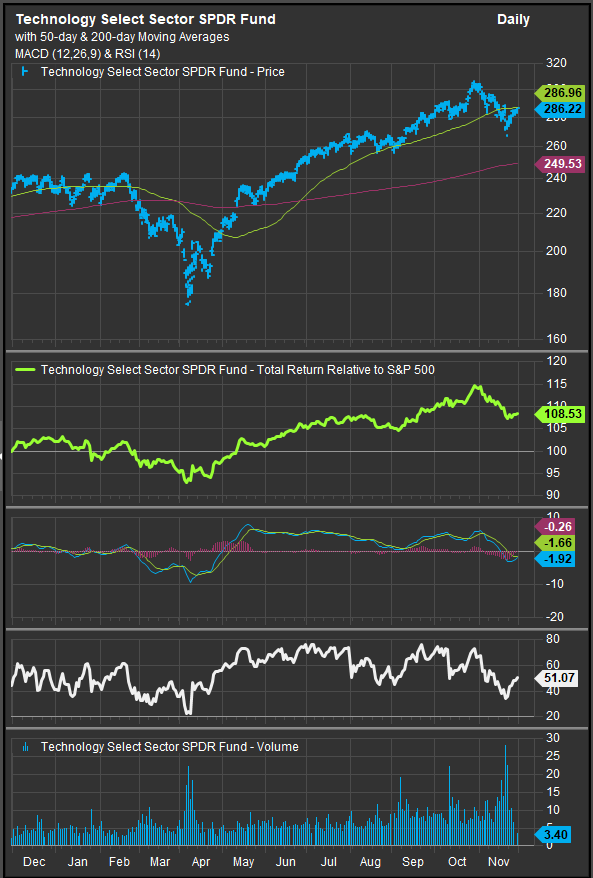
XLK
From a technical perspective, high volume selling has resulted in near-term oversold conditions. The longer-term uptrend price structure remains intact. Given continued robust earnings, we would expect accumulation near present levels.
A Consumer Losing Momentum
The more cautious read comes from the household sector, where the data have meaningfully deteriorated:
- Conference Board confidence plunged to 88.7, the weakest final reading since mid-2022.
- The labor-market differential continued to narrow, historically a leading indicator of rising unemployment.
- Retail sales disappointed, with the control group posting its first monthly decline since April.
- Thanksgiving travel bookings were down ~4.5% y/y as government shutdown fears altered plans.
Even strong retail earnings—KSS (+42%), ANF (+37%), URBN, ROST, BBY—came with caveats. Many of these companies benefited from cost controls, lower markdowns, or narrow category outperformance rather than broad consumer strength. Several retailers flagged tariff-related inventory issues that may worsen in Q1. And the holiday season itself may be at risk. Deloitte surveys show consumers plan to spend 4% less on Black Friday, and NRF acknowledged that while traffic may be healthy, growth will be slower.
In other words, the November bounce in retail equities may have been driven more by “better than feared” results than evidence of a strengthening consumer. A holiday-season disappointment is a credible risk.
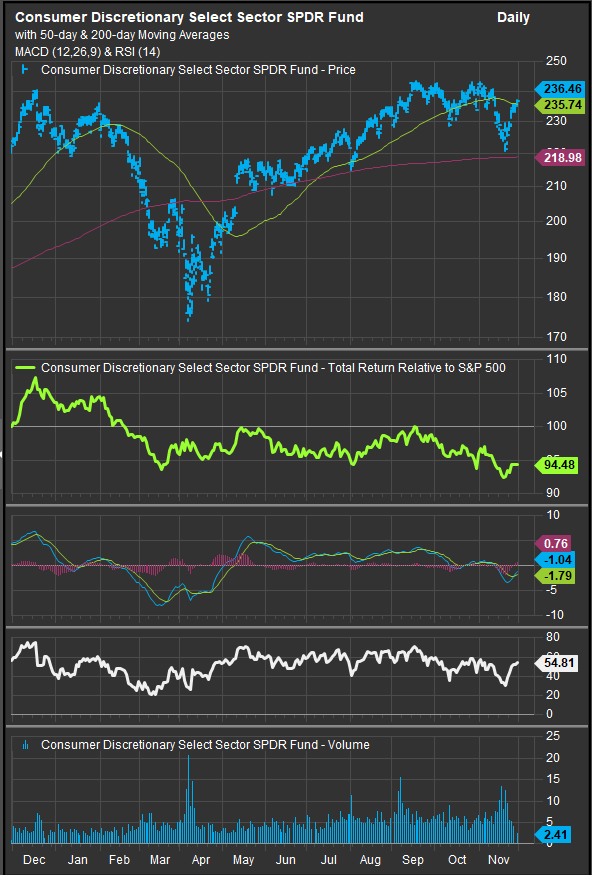
XLY
Overbought in a weak longer-term trend isn’t a strong technical position at the sector level. Easing is expected to help, but we’re skeptical that lower interest rates will be enough to change the trajectory for households by itself.
Earnings Trends and Style Preferences Into December
Earnings breadth improved across several major industries, particularly in Tech (ADSK, DELL, ORCL), Communications (GOOGL, META’s chip-partnership potential), and Healthcare (EXAS, NVO, MRK). Capital goods also stabilized, with core durable goods orders rising +0.9% m/m. These trends support a continued modest preference for quality growth—especially large-cap firms with real pricing power, clear AI monetization paths, and low balance-sheet risk.
But risks to consumer-exposed segments are building. Softening in labor-market indicators, narrowing spreads in consumer credit, weaker confidence readings, and inventory overhangs all contribute to a more cautious outlook on value and cyclical themes heading into December.
Laggard Sectors Setup for Potential Rotation
Meanwhile, low-volatility equities—which lagged in the recent rebound—may regain relevance. If December data disappoints or the holiday season underwhelms, low-vol strategies become a natural hedge, particularly given their cheaper relative valuation after November underperformance.
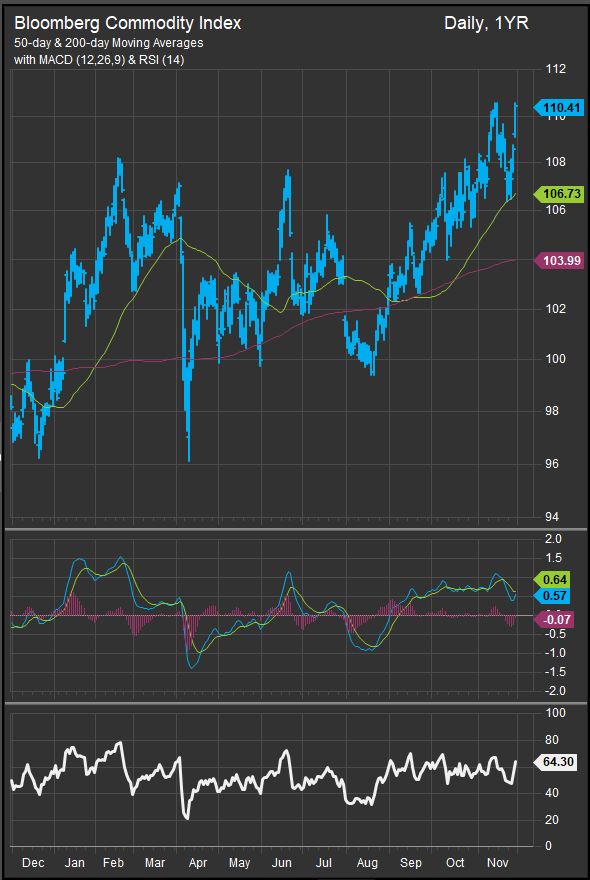
Commodity-linked equities, especially in Energy and Materials, also look deeply oversold. With crude down sharply and metals mixed, positioning is structurally light. These areas could stage a rebound if dovish Fed expectations continue to build, though follow-through will require improved global demand signals. Commodities prices have shown strength over the intermediate term (chart below).
Outlook: Cautious Optimism, But Vulnerable to Consumer Weakness
The rally into late November reflected better technicals, fading forced selling, and surging rate-cut expectations—not a clean bill of health for the economy. With the Fed entering blackout and a cluster of high-impact data (ISM, ADP, PCE, job cuts) coming in the first week of December, the market may face a more uneven path.
If the consumer weakens further—or if holiday spending misses expectations—the November leadership rotation could falter. AI dispersion will likely remain high, and low-volatility equities may regain market interest as investors hedge against surprise downside.
A year-end rally is still plausible, particularly for quality growth and oversold cyclicals. But it will depend heavily on the next set of data—and the resilience of a consumer who is showing the first meaningful signs of fatigue all year.
Charts and data sourced from FactSet Research Systems inc.
