

The macro backdrop changed meaningfully last week. The labor market weakened sharply, but corporate earnings, manufacturing activity and productivity remained strong. At the same time, tentative progress toward resolving the U.S.-Iran conflict reduced some of the geopolitical premium embedded in energy prices and inflation expectations.
That combination creates an increasingly important possibility for investors: slower growth without recession, accompanied by lower long-term nominal and real yields.
If inflation cooperates, that environment should favor Quality and Growth, particularly Information Technology, Communication Services and other duration-sensitive sectors. Industrials remain supported by manufacturing and capital spending. The areas under the greatest pressure are Momentum, crowded AI hardware trades and, increasingly, Energy.
The critical variable is now the long end of the Treasury curve.
Jobs Weaken, but Recession Signals Remain Mixed
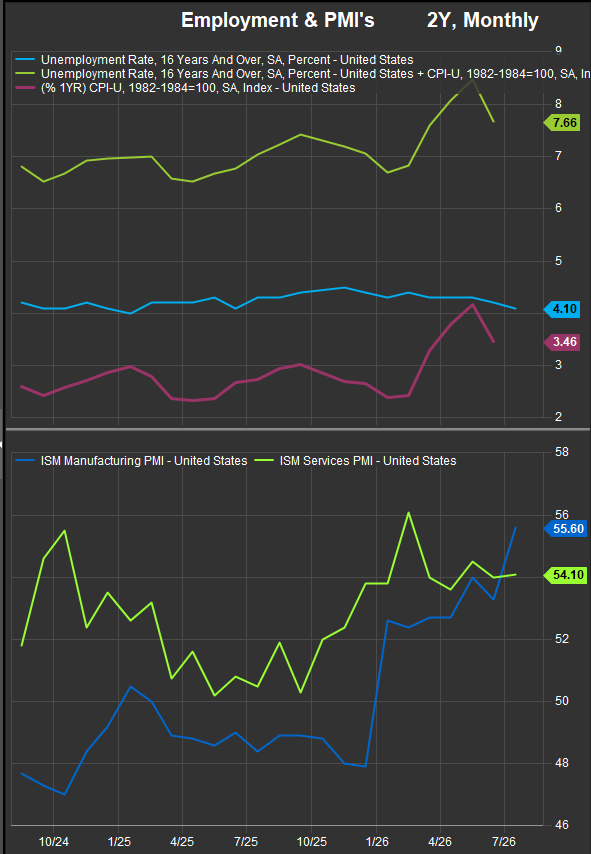
July nonfarm payrolls unexpectedly declined 23,000, versus expectations for an increase near 80,000. May and June were revised lower by a combined 103,000, reducing three-month average payroll growth to only 20,000. Wage growth also cooled, with average hourly earnings increasing just 0.1% for the month.
Those numbers make another near-term Federal Reserve rate hike more difficult to justify. But the report does not establish that the economy is entering recession.
Initial unemployment claims remain below 200,000, Challenger layoffs declined 27% in July and announced hiring plans improved. Private payrolls were still positive.
The emerging picture is one of companies hiring less rather than aggressively firing workers.
Productivity provides another important piece of the puzzle. Second-quarter productivity increased 1.4%, while unit labor costs rose only 1.3%, significantly below expectations. Companies may be generating more output without needing the same pace of employment growth—a potentially favorable result of AI, automation and other productivity investments.
Earnings and Manufacturing Still Point to Expansion
Corporate fundamentals remain difficult to reconcile with a recessionary outlook.
Strategists highlighted historically strong Q2 earnings results, record margins and accelerating earnings growth for the median S&P 500 company. Profit guidance has also strengthened, and consensus earnings estimates for the second half of 2026 and 2027 continue to move higher.
Manufacturing provides similar evidence.
The July ISM Manufacturing Index rose to 55.6, its highest level since May 2022. New orders increased to 56.7, production surged to 58.5 and manufacturing employment returned to expansion for the first time in nearly three years. Companies continued to report strong demand from AI infrastructure, semiconductors, data centers and defense.
That remains particularly constructive for Industrials, electrical equipment, automation and selected technology suppliers.
Inflation Is the Missing Piece
The macro backdrop is not yet Goldilocks because services inflation remains elevated.
July ISM Services stayed in expansion, but its Prices Paid Index rose to 70.3, while S&P Global reported the fastest input-cost inflation since May 2025. Tariffs, fuel and other input costs continue to pressure businesses.
Other indicators were more encouraging. Wage growth slowed, productivity improved, unit labor costs undershot expectations and one-year consumer inflation expectations edged lower.
That makes the next CPI and core inflation readings critical.
If employment continues slowing while underlying inflation moderates, the market can treat weaker labor data as a bullish rates development rather than a bearish earnings signal.
Lower Real Yields Are the Market Pivot
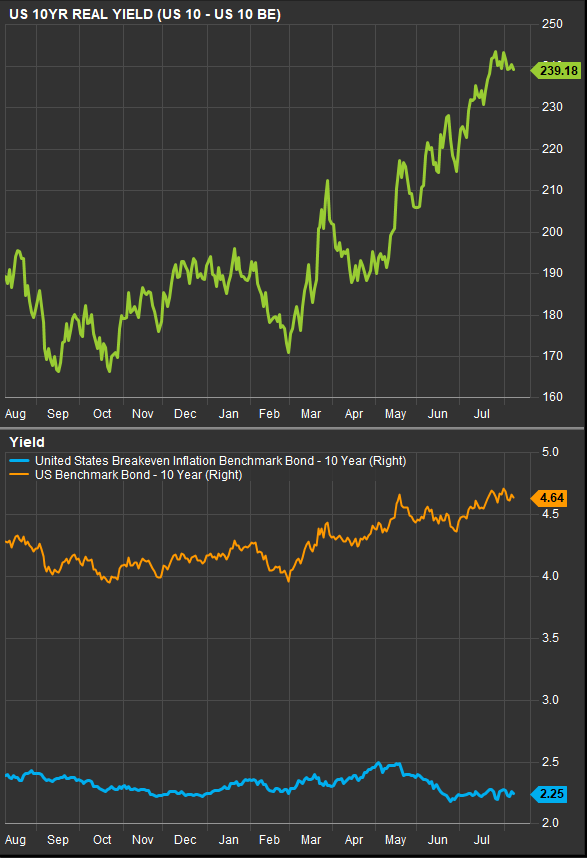
For Growth stocks, the most important development would be a sustained decline in long-term real yields.
High real rates have been one of the largest obstacles facing technology and other long-duration equities during the summer. They reduce the present value of future earnings and make expensive Growth stocks more sensitive to disappointment.
The July momentum unwind compounded that problem. Hedge funds aggressively reduced gross exposure, producing one of the most significant de-grossing episodes since 2020. Positioning is now considerably cleaner, reducing one source of forced selling.
That means falling real yields could have a more powerful effect now than they would have several weeks ago.
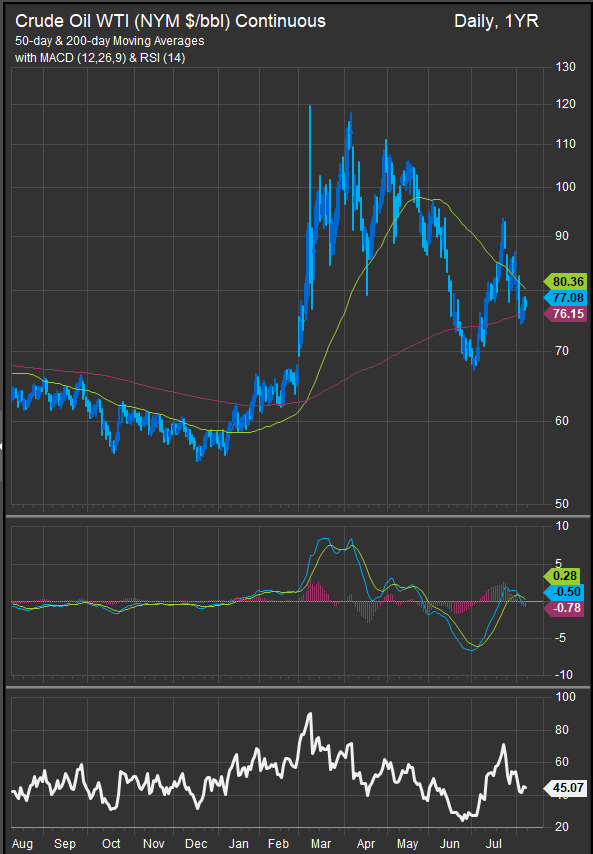
Middle East de-escalation could accelerate the process. Progress toward reopening the Strait of Hormuz would reduce pressure on oil, shipping costs and inflation expectations. President Trump canceled another planned round of strikes, although negotiations remain complicated and Iranian demands continue to limit confidence in a durable agreement.
Sector and Factor Implications
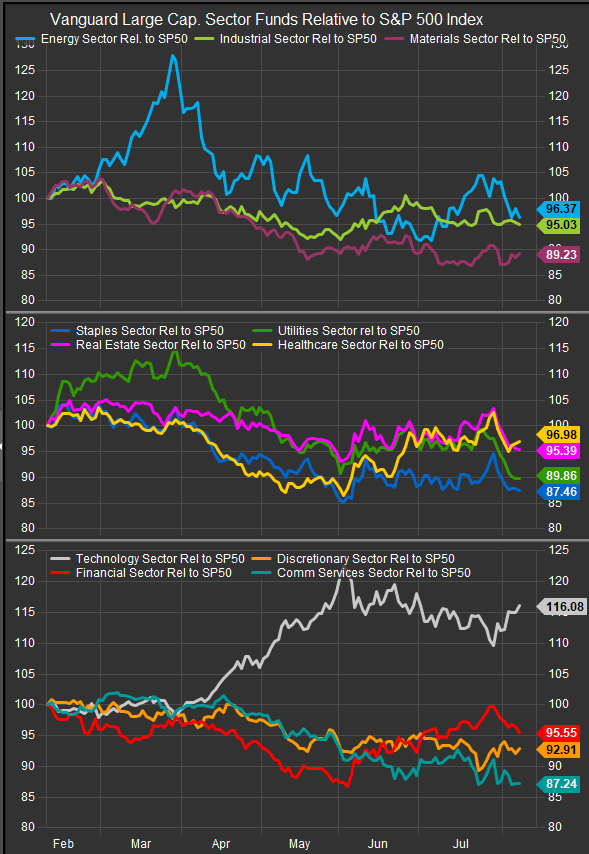
Information Technology: Improving. Strong AI and cloud demand remain intact, while lower real yields would relieve valuation pressure. Favor profitable technology over the most crowded semiconductor and hardware trades.
Communication Services: Improving alongside Growth. Lower discount rates would support cash-generative digital platforms.
Industrials: Remain one of the strongest cyclical sectors. Manufacturing, new orders, defense and AI-related capital spending remain supportive.
Real Estate and Utilities: Potential beneficiaries if long-term yields establish a sustained decline. Utilities also benefit from structural power demand tied to data centers.
Consumer Discretionary: Selectively constructive. Lower rates and oil would help, but weakening employment creates a growing consumer risk.
Energy: Relative pressure is increasing as the probability of Middle East de-escalation rises and the geopolitical oil premium becomes vulnerable.
At the factor level, Quality remains the strongest bridge between the current and emerging regimes. Growth becomes increasingly attractive if real yields break lower. Value still benefits from industrial strength, but some of its summer tailwinds could fade. Momentum remains technically damaged following July’s deleveraging.
The Bottom Line
The labor-market is showing signs of deceleration at the margins while earnings, manufacturing and credit deterioration associated with recession are not yet present.
That creates a potentially favorable investment transition.
If core inflation confirms that price pressures are easing—and Middle East de-escalation removes additional energy risk—long-term nominal and real yields should have room to fall.
That would favor Quality and Growth, improve the outlook for Technology, Communication Services, Real Estate and Utilities, and leave Industrials supported by strong capital spending.
The signal to watch is straightforward: the 10-year real yield.
If it moves sustainably lower while earnings remain strong, August’s Growth rebound could become the next durable phase of market leadership.
Sources:
- Goldman Sachs — S&P 500 earnings beat rates, hedge-fund leverage/de-grossing and positioning.
- Deutsche Bank — record earnings beat rates, sales growth, margins and upward earnings revisions.
- Morgan Stanley — acceleration in median-stock earnings growth.
- JPMorgan — corporate profit-guidance revisions and hedge-fund de-grossing/positioning.
- Jefferies — strengthening forward EPS revision ratios.
- Financial Times — reporting on Fed Chair Kevin Warsh’s communications strategy and concerns around Fed credibility/reaction-function uncertainty.
- StreetAccount — July employment report recap and broader weekly macro/market synthesis.
- CME FedWatch — market-implied September Fed rate-hike probabilities following the jobs report.
- Challenger, Gray & Christmas — July layoff trends, technology-sector cuts and AI-related layoffs.
- S&P Global — July Services and Manufacturing PMI readings and commentary on activity and input-price pressure.
Disclaimer: This commentary is for informational purposes only and does not constitute investment advice. Market conditions, economic data and sector exposures can change. Investors should consider their objectives, risks, charges and expenses before investing.
